Hot Spots on Dogs: Signs, Causes, Treatment, and Prevention
What Are Hot Spots on Dogs?
Hot spots on dogs are areas of inflamed, infected skin that appear quickly and can become wet, red, painful, and smelly. Veterinarians commonly call them acute moist dermatitis or pyotraumatic dermatitis. They often show up on the head, hips, and legs, though they can appear elsewhere and may hide under thick or matted fur.
What Do Dog Hot Spots Look Like?
A hot spot usually starts as intense itching or irritation. Then the dog licks, scratches, or chews the area so much that the skin becomes raw and inflamed. Common signs include a red patch, moisture or oozing, hair loss, scabbing, tenderness, and a bad odor. Because this cycle can escalate fast, a small irritated area can look much worse within hours.
What Causes Hot Spots on Dogs?
Hot spots are usually triggered by something that makes the dog itchy or uncomfortable in the first place. That can include fleas, allergies, ear problems, poor coat ventilation, trapped moisture, or skin irritation. Once the dog starts scratching or licking, the skin gets damaged, bacteria take advantage, and the area gets even itchier, creating a self-perpetuating cycle. Flea allergy dermatitis is one common cause, and dogs with long or dense coats may be more prone to hot spots because moisture and heat get trapped more easily.
Are Some Dogs More Likely to Get Them?
Yes. Cornell notes that hot spots are especially common in dogs with long or thick coats, and examples include breeds like Newfoundlands, German Shepherd Dogs, and Golden Retrievers. Dogs with drop ears or heavy coats may also be at higher risk, especially in warm weather or after swimming if the coat stays damp.
How Are Hot Spots Treated?
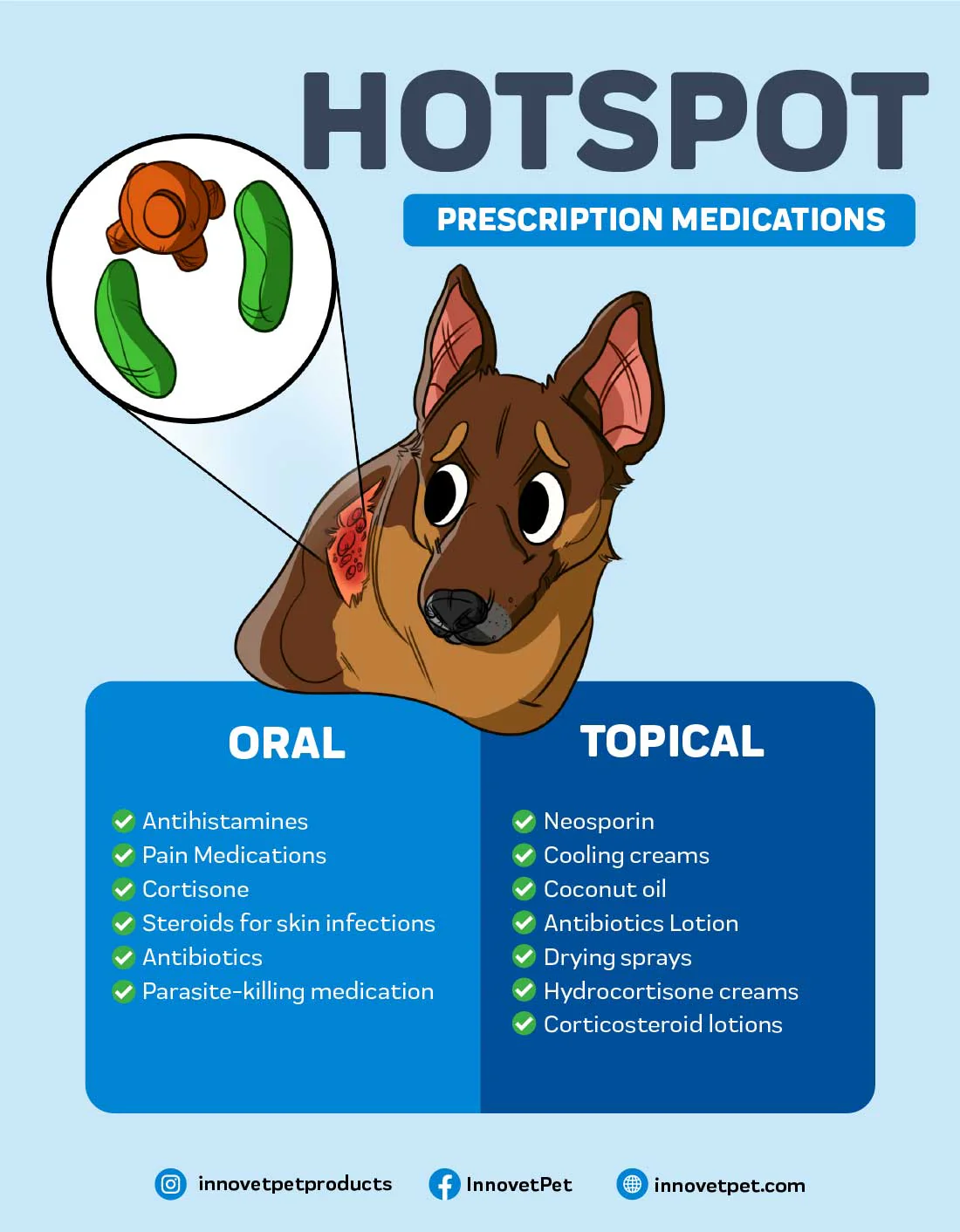
Treatment usually focuses on stopping the itch-scratch cycle and addressing the underlying cause. Veterinary care may involve clipping the hair around the lesion, cleaning the skin, using topical treatment, and sometimes prescribing anti-inflammatory medication or antibiotics depending on severity. Since hot spots can be painful and can worsen rapidly, many dogs benefit from a veterinary exam rather than home treatment alone.
Can You Treat a Hot Spot at Home?
Some mild cases may improve with early first aid, especially if the area is small and easy to reach. Even then, dog owners should be cautious. The wound needs to stay clean and dry, and the dog must be stopped from licking or scratching it further. But if the sore is large, very painful, foul-smelling, hidden under fur, near the face, or not improving quickly, a vet visit is the safer move. Veterinary sources also stress that the underlying trigger still needs attention, whether that is fleas, allergies, ear disease, or another skin issue.
How to Prevent Hot Spots on Dogs
Prevention starts with controlling the cause of itching. Good flea prevention, prompt treatment of ear issues, managing allergies, drying your dog well after baths or swimming, and regular grooming can all help. For dogs with recurring skin problems, a vet may need to look deeper for allergies, yeast, or other chronic dermatitis issues.
When to Call the Vet
Call a veterinarian if the hot spot spreads quickly, smells bad, looks infected, causes strong pain, or keeps coming back. Recurrent hot spots often mean there is an unresolved problem underneath, such as flea allergy, atopic dermatitis, or another chronic skin condition.
Final Thoughts
Hot spots on dogs are common, but they are not something to ignore. They can develop fast, become painful quickly, and usually point to an itch or irritation problem that needs attention. For pet owners in the U.S. and other top-tier markets, the best approach is early action: keep the area clean, stop further licking, and get veterinary help when the sore is severe or keeps returning.