Move In and Move Out Checklist: A Practical Guide for Renters and Landlords
A move in and move out checklist is one of the simplest tools in renting, but it can save a huge amount of stress later. Whether you are a tenant moving into a new place or a landlord preparing a property for turnover, a checklist helps document the condition of the home at the beginning and end of the lease. HUD’s move-in and move-out inspection materials are built around exactly that idea: the unit’s condition should be recorded so both sides have a clear reference point.
Many rental problems start because people rely on memory instead of documentation. A checklist creates a written record of what was clean, what was damaged, what was working, and what needed attention. That matters most when questions come up about repairs, cleaning, or security deposit deductions after move-out. Resources for landlords and tenants consistently emphasize that move-in and move-out walk-throughs are a standard and useful part of the rental process.
Why This Checklist Matters
At move-in, the checklist protects the tenant by making sure existing issues are noted before they can be blamed on the new renter. At move-out, it protects the landlord by showing the condition of the property after the tenant leaves. Apartments.com’s landlord guidance explains that the move-in inspection helps record pre-existing problems, while the move-out inspection is used to assess damage that may affect the security deposit.
This is why a checklist should never be treated like a formality. It is not just a box to tick. It is a working document that can prevent arguments later. A good checklist is detailed, signed, dated, and supported by photos or video whenever possible. Both landlord and tenant benefit when the process is handled carefully.
What to Check at Move-In
A move-in checklist should be completed before the tenant fully settles in. Ideally, the property should already be vacant, cleaned, and ready for occupancy before the inspection begins. That makes it easier to notice stains, cracks, broken fixtures, and other issues clearly.
Start with the general condition of each room. Look at floors, walls, ceilings, doors, locks, and windows. Check whether blinds or coverings are intact. Turn lights on and off, test electrical outlets, inspect closets, and confirm smoke alarms or fire safety equipment are present and functioning. HUD’s move-in and move-out forms list many of these same room-by-room items, including entrance areas, floors, walls, ceilings, windows, lighting, electrical outlets, closets, and fire alarms.
It is also smart to test the practical things people forget during a quick walkthrough. Run faucets, check water pressure, flush toilets, look under sinks for leaks, and test appliances. Nolo’s renter guidance specifically recommends checking for dirt, damage, mildew, water pressure, and sink drainage rather than only looking at obvious surface conditions.
What to Check at Move-Out
A move-out checklist covers many of the same categories, but the focus changes slightly. Now the goal is to compare the property’s condition at the end of the lease against the condition recorded at move-in. That helps separate normal wear and tear from actual damage. It also makes it easier to prepare an itemized list if deductions need to be made from the security deposit.
At move-out, check every room again for holes in walls, damaged flooring, broken blinds, missing fixtures, stains, appliance damage, plumbing issues, and overall cleanliness. Make sure trash has been removed, keys are returned, and any landlord-provided items are still in place. If repairs are needed, the checklist should note exactly what was found and where. The more specific the notes are, the more useful the checklist becomes.
The Role of Photos and Video
A written checklist is strong, but visual evidence makes it even better. Apartments.com recommends taking pictures and videos during move-in inspections because they provide strong proof of the property’s condition. Nolo also advises tenants to take photos at move-out and keep records to help support security deposit disputes if necessary.
That means the best approach is to use both. Fill out the checklist carefully, then take clear dated photos of each room, each appliance, and any noticeable issue. If there is a stain, a chipped tile, or a damaged screen, photograph it. If the unit is spotless at move-out, photograph that too. Good documentation is often what makes the difference when there is disagreement later.
A Simple Room-by-Room Checklist Format
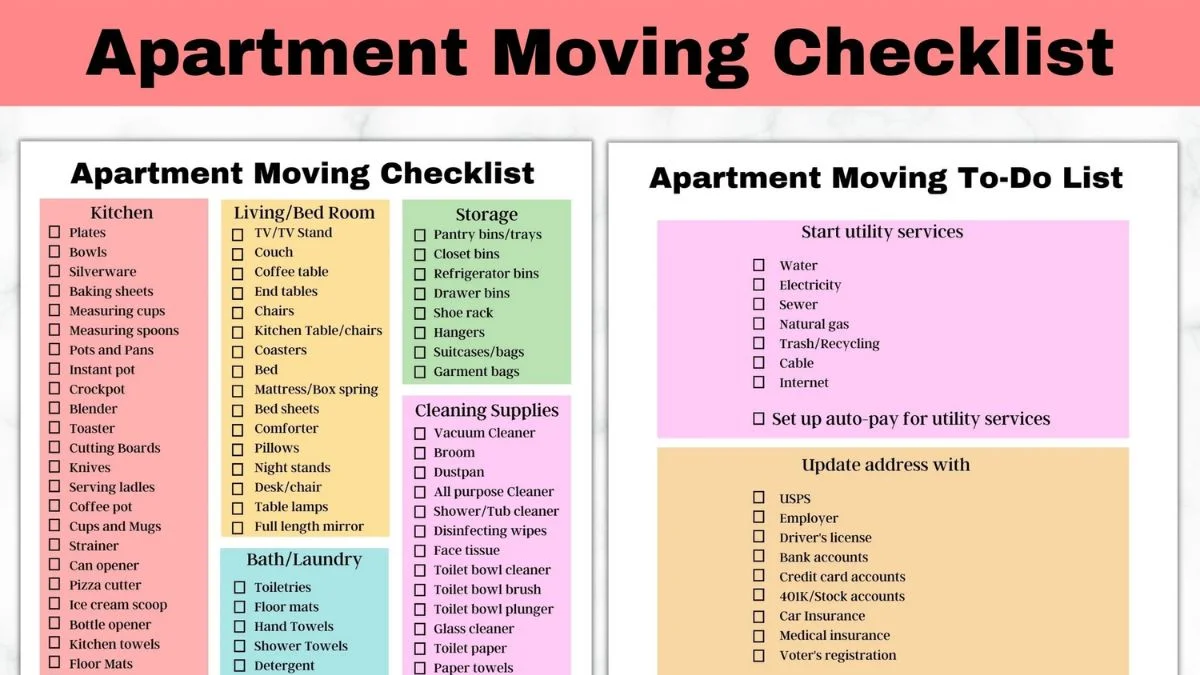
A practical checklist works best when it is broken down by area. For each room, include short sections for floors, walls, ceilings, windows, doors, locks, lighting, outlets, and fixtures. Then add space for notes and condition details. Apartments.com specifically recommends a room-by-room checklist with elements like floors, walls, doors, and windows, plus room for written notes and signatures at the end.
You can also add sections for kitchen appliances, bathrooms, plumbing, HVAC, laundry area, garage, patio, and entryway if those apply to the property. The point is not to make the form look impressive. The point is to make sure nothing important gets overlooked.
Final Thoughts
A move in and move out checklist is one of the best ways to keep a rental process organized and fair. It helps tenants avoid being blamed for old problems, and it helps landlords document the true condition of the property when a lease ends. Official HUD forms and rental industry guidance both support the idea that inspections should be documented carefully and used as a standard business practice.