Dog Feeding Chart by Age and Weight: A Simple Guide for Healthy Portions
Feeding your dog the right amount is one of the most important parts of keeping them healthy. Many pet owners search for a dog feeding chart by age and weight because they want a simple way to understand how much food their dog may need at different stages of life. Puppies, adult dogs, and senior dogs all have different nutritional needs, and body weight also plays a major role in portion size.
The truth is that there is no single feeding chart that fits every dog perfectly. Breed, activity level, metabolism, food type, and health conditions can all affect how much your dog should eat. Still, understanding the basics of feeding by age and weight can help you build a routine that supports healthy growth, energy, and weight management.
If you want to avoid overfeeding or underfeeding your dog, this guide will help you understand how feeding schedules and portion needs change over time.
Why Age and Weight Matter in Dog Feeding
A dog’s age and weight directly affect how much energy they need. Puppies are growing quickly, so they usually need more frequent meals and nutrient-dense food. Adult dogs often need balanced portions to maintain a healthy body condition. Senior dogs may need fewer calories if they become less active, although their diet still needs to support muscle, digestion, and joint health.
Weight matters because larger dogs naturally require more food than smaller dogs. However, the amount should always match the dog’s ideal healthy weight rather than just current size. A dog who is overweight may need portion control, while an underweight dog may need more calories or nutritional support.
Using a dog feeding chart by age and weight gives you a starting point, but your dog’s physical condition and lifestyle should always guide final adjustments.
General Dog Feeding Chart by Age and Weight
The following chart is a basic guide for dry dog food portions. Actual feeding amounts can vary depending on the brand and calorie content of the food, so it is always important to read the label on your dog’s specific product.
Puppies
Puppies usually need to eat more often because they are growing and burning a lot of energy.
- 2 to 3 months old
- 2 to 5 pounds: about 1/3 to 1 cup per day
- 6 to 10 pounds: about 1 to 1 1/2 cups per day
- 11 to 20 pounds: about 1 1/2 to 2 1/2 cups per day
- 3 to 6 months old
- 2 to 5 pounds: about 1/3 to 3/4 cup per day
- 6 to 10 pounds: about 3/4 to 1 1/4 cups per day
- 11 to 20 pounds: about 1 1/4 to 2 cups per day
- 21 to 50 pounds: about 2 to 4 cups per day
- 6 to 12 months old
- Small breeds: about 1/2 to 1 1/2 cups per day
- Medium breeds: about 1 1/2 to 3 cups per day
- Large breeds: about 3 to 5 cups per day
Puppies are often fed three to four meals per day during the early months, then reduced to two meals per day as they grow.
Adult Dog Feeding Guide
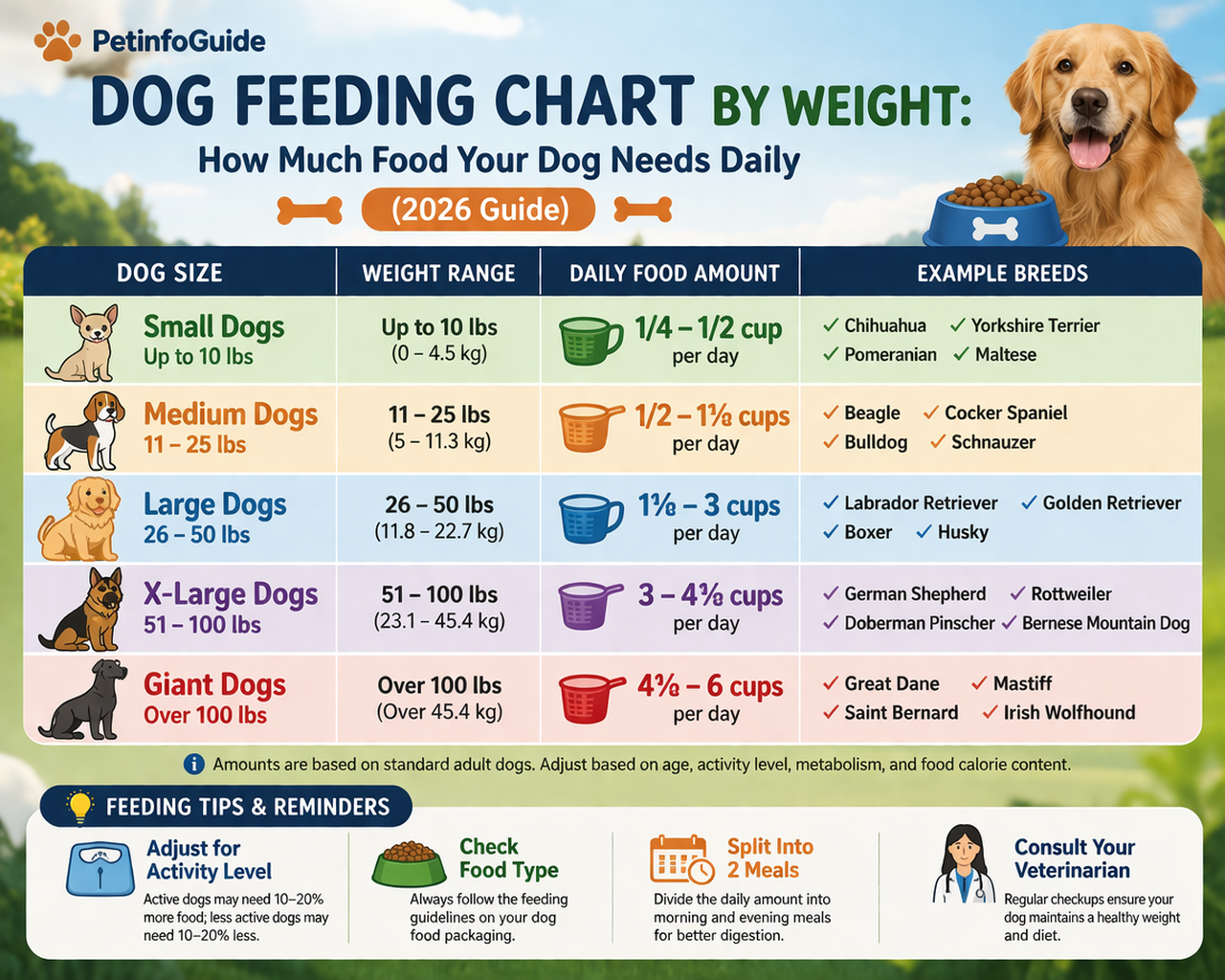
Adult dogs generally do well with two meals per day. Their portion size depends heavily on their body weight and activity level.
Adult Dogs by Weight
- 3 to 10 pounds
- About 1/3 to 1 cup per day
- 10 to 20 pounds
- About 1 to 1 1/2 cups per day
- 20 to 30 pounds
- About 1 1/2 to 2 cups per day
- 30 to 50 pounds
- About 2 to 3 cups per day
- 50 to 75 pounds
- About 3 to 4 cups per day
- 75 to 100 pounds
- About 4 to 5 cups per day
Highly active dogs may need more than these general amounts, while less active dogs may need less. Working dogs, sporting breeds, and very energetic young adults often burn more calories than indoor or less active dogs.
Senior Dog Feeding Guide
Senior dogs may still eat similar amounts to adult dogs, but many need fewer calories as they age. This is because older dogs often slow down and exercise less. Overfeeding a senior dog can lead to unwanted weight gain, which may put extra stress on joints and overall health.
A senior dog feeding routine should focus on maintaining a healthy weight, preserving muscle, and supporting digestion. Some senior dogs benefit from specially formulated food that is easier to digest and lower in calories.
In many cases, portion size for senior dogs is based more on activity level and body condition than age alone. If your dog is maintaining a healthy weight and energy level, their food amount may not need major changes.
How Often Should You Feed Your Dog?
A dog feeding chart by age and weight is helpful, but feeding frequency matters too.
Puppies
Young puppies usually need three to four meals a day because their stomachs are small and their energy needs are high.
Adult Dogs
Most adult dogs do best with two meals a day, one in the morning and one in the evening. This helps with digestion and keeps their energy more stable.
Senior Dogs
Senior dogs also often do well with two meals a day, though some may benefit from smaller, easier-to-digest portions depending on health needs.
Signs You May Be Feeding Too Much or Too Little
Even the best feeding chart is only a guide. Your dog’s body condition is one of the best ways to tell if portions are right.
If your dog is being fed too much, you may notice weight gain, low energy, difficulty feeling the ribs, or a loss of waist shape. If your dog is not getting enough food, you may notice weight loss, excessive hunger, low energy, or visible ribs and hip bones.
A healthy dog should have a visible waist when viewed from above and a slight tummy tuck when viewed from the side. You should be able to feel the ribs without pressing too hard, but they should not be sticking out.
Tips for Using a Dog Feeding Chart Correctly
Always check the feeding instructions on your dog food packaging because calorie levels vary by brand. One cup of one product may contain far more calories than one cup of another. This is why measuring food carefully matters.
Treats should also be counted as part of your dog’s daily calories. If your dog gets a lot of snacks, table scraps, or training treats, you may need to reduce meal portions slightly.
It is also important to monitor changes over time. Puppies grow quickly, adults may gain weight if activity drops, and senior dogs may need diet adjustments as their health changes.
Final Thoughts on a Dog Feeding Chart by Age and Weight
Using a dog feeding chart by age and weight is a smart way to build a healthier feeding routine for your pet. It gives you a starting point for portion sizes and helps you understand how a dog’s nutritional needs change from puppyhood to adulthood and beyond.
The most important thing is to combine chart guidelines with observation. Watch your dog’s body condition, energy, and appetite, and adjust portions when needed. With the right balance of age-appropriate food, measured portions, and regular feeding times, you can help your dog stay healthy, active, and well nourished for years to come.