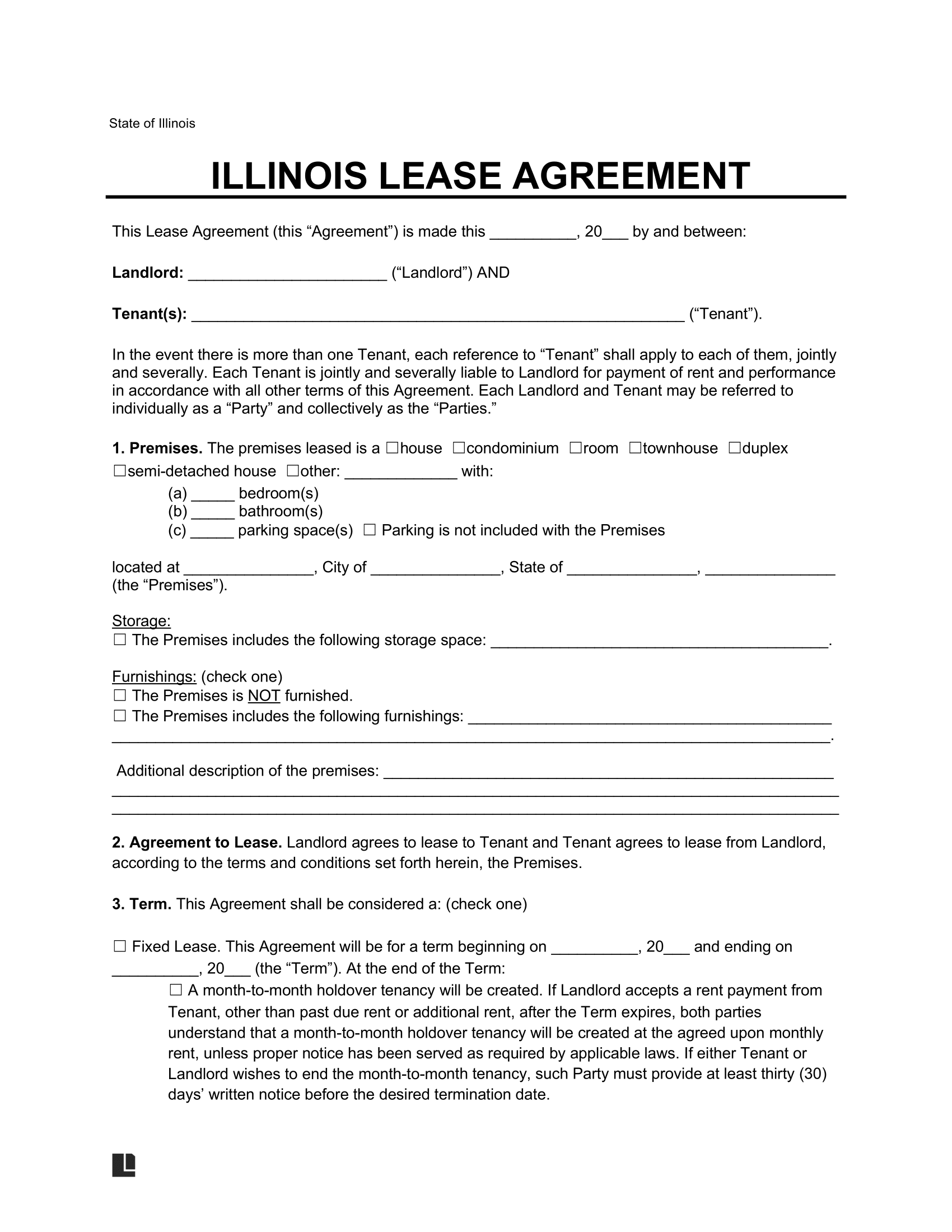
Illinois Residential Lease Agreement Form: What It Should Include in 2026
An Illinois residential lease agreement form is the written contract that sets the rules for renting a home, apartment, condo, or other residential unit in Illinois. It explains the basic deal between the landlord and tenant, including the property being rented, the lease term, the rent amount, when rent is due, and other important conditions of occupancy. In Illinois, some leases can be oral, but a lease for longer than one year must be in writing, which makes a solid written lease form especially important for longer rental arrangements.
For landlords, a good lease form helps set expectations clearly and reduces misunderstandings later. For tenants, it creates a record of their rights and obligations before they move in. The best Illinois residential lease agreement form is not just a generic template. It should reflect Illinois law, include the right disclosures, and account for local ordinances if the property is in places like Chicago or suburban Cook County.
What an Illinois Residential Lease Agreement Form Usually Includes
A standard Illinois lease form should clearly identify the rental property, the names of the tenants, the lease start and end dates, the amount of rent, and the payment terms. Illinois Legal Aid’s sample lease form also highlights other common items such as the security deposit, pet terms, and signatures from both the landlord and tenant. These are the basic building blocks of a residential lease and help make the agreement easier to understand and enforce.
A strong lease form should also explain how the tenancy ends or renews, whether the lease becomes month-to-month after the initial term, and what rules apply to late payments, occupancy, and use of the property. Illinois Legal Aid explains that written rental agreements commonly cover the premises, the term, what happens when the lease ends, and the payment details. Lease terms can give tenants more rights than the law requires, but not fewer, and terms that conflict with the law may not be enforceable.
Illinois-Specific Disclosures That Matter
One of the biggest current issues for Illinois lease forms is the new statewide Safe Homes summary requirement. Effective January 1, 2026, Illinois landlords must provide the Summary of Rights for Safer Homes as the first page of every written residential lease, whether the lease is new or a renewal. The Illinois Department of Human Rights also says landlords must obtain each tenant’s signature in the acknowledgment section at the bottom of each page of that summary.
Illinois lease forms may also need radon information. Under the Illinois Radon Awareness Act, lessors must provide prospective or renewing tenants in units below the third story with the IEMA-OHS “Radon Guide for Tenants” pamphlet and copies of any records or reports showing radon concentrations that indicate a hazard. This is an Illinois-specific disclosure requirement that many generic lease templates miss.
For homes built before 1978, federal lead-based paint disclosure rules also apply. The EPA says landlords must provide renters with the “Protect Your Family From Lead In Your Home” pamphlet, disclose known information about lead-based paint and lead hazards, provide available records and reports, and include a lead warning statement in or attached to the lease. If you are using an Illinois residential lease agreement form for older housing, this part is essential.
Security Deposit and Rent Terms to Understand
A lease form should also spell out the security deposit and rent terms clearly. According to the Illinois Attorney General, there is no statewide legal limit on the amount a landlord can require as a security deposit. State law also requires interest on a security deposit if it is held for at least six months and the building or complex has at least 25 units. In buildings or complexes with five or more units, the Illinois Security Deposit Return Act requires the deposit to be returned within 45 days if certain conditions are met, and if deductions are made, the landlord must provide an itemized statement with paid receipts within 30 days.
Rent and notice terms matter too. Illinois Legal Aid notes that landlords generally cannot increase rent during a written lease term unless the lease allows it. The Illinois Attorney General also explains that for month-to-month tenancies, landlords usually must give 30 days’ notice before raising rent. These are good examples of why a lease form should be specific about rent, renewals, and notice requirements from the beginning.
Local Rules Can Change What Your Lease Form Needs
A statewide Illinois lease template may still be incomplete if the property is in an area with local landlord-tenant rules. In Chicago, the official Residential Landlord and Tenant Ordinance summary must be attached to each written lease and each renewal, and must also be given to tenants in oral rental agreements. In suburban Cook County, the RTLO adds local requirements and protections, including a summary attachment rule, a 60-day notice for non-renewal of a lease, a 2-day notice for unit entry, and limits on late fees.
This means that an Illinois residential lease agreement form should not be treated as one-size-fits-all. A landlord in Springfield may need a different set of attachments than a landlord in Chicago, and a tenant should always check whether county or city ordinances add extra rules beyond state law. Illinois Legal Aid also notes that some local laws require additional papers such as ordinance summaries, utility-cost disclosures, and security-deposit rules.
Where to Find a Good Illinois Lease Form
If you need a starting point, Illinois Legal Aid offers a sample Illinois lease blank form for residential tenancies. It is designed for Illinois residents and landlords and can be used as a practical base document. Still, a sample form should usually be reviewed and updated to fit the property, the lease term, and any local ordinance requirements that apply.
Final Thoughts
An Illinois residential lease agreement form should do more than fill in rent and dates. It should clearly describe the tenancy, include the required signatures and financial terms, and account for Illinois-specific disclosures like the 2026 Safe Homes summary, radon information for certain units, and lead-based paint disclosures for pre-1978 housing. On top of that, local ordinances in Chicago and suburban Cook County can require additional attachments and rules.
Using a current, Illinois-aware lease form is one of the easiest ways to avoid confusion later. It helps landlords stay compliant and gives tenants a clearer picture of what they are signing before move-in day.