Prorated Rent Calculator Move In: How to Calculate Partial Month Rent Easily
Moving into a new rental property in the middle of the month often brings one common question: how much rent should you actually pay for those first few days or weeks? That is where a prorated rent calculator for move in becomes useful. Instead of paying for a full month when you are only living in the unit for part of it, prorated rent helps determine the exact amount you owe based on the number of days you will actually occupy the property.
For both tenants and landlords, understanding prorated rent can prevent confusion and make the lease process smoother. Whether you are moving into an apartment, condo, or rental home, knowing how prorated rent works can help you plan your budget and avoid surprises on move-in day.
What Is Prorated Rent?
Prorated rent is a partial rent amount charged when a tenant moves in on a date other than the first day of the month. Since rent is usually calculated monthly, landlords often adjust the first payment so the tenant only pays for the days they are actually living in the property before the next full rent cycle begins.
For example, if monthly rent is $1,500 and you move in on the 20th of the month, it would not make sense to pay the full amount for that month. Instead, the landlord calculates rent for only the remaining days of that month. This adjusted payment is known as prorated rent.
A prorated rent calculator makes this process easier by helping you estimate the correct amount quickly and accurately.
Why a Prorated Rent Calculator for Move In Is Important
A prorated rent calculator is helpful because it removes the guesswork from a very common rental situation. Many tenants are unsure how their landlord arrived at the amount due, while some landlords want a fast and fair way to explain the first payment.
Using a calculator allows both sides to see the math clearly. It can also help tenants prepare for move-in expenses, which often include more than just the first rent payment. Security deposits, pet deposits, utility setup fees, and moving costs can all add up quickly. If you know your prorated rent ahead of time, it becomes easier to manage your total move-in budget.
For landlords and property managers, a clear prorated rent amount helps create a more professional rental process. It also reduces misunderstandings and supports better communication with new tenants.
How Prorated Rent Is Calculated
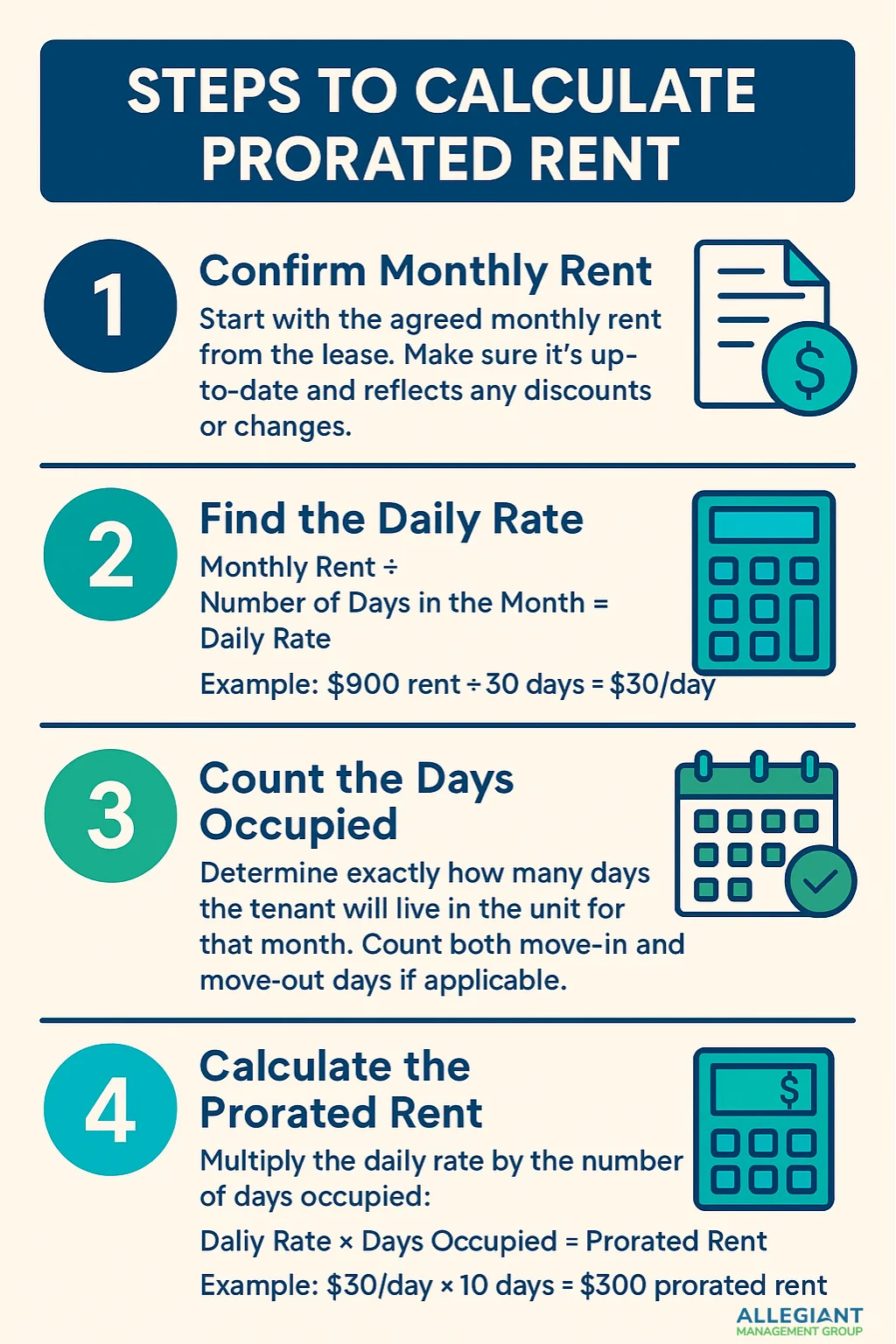
The basic idea behind prorated rent is simple. You divide the monthly rent by the number of days in the month, then multiply that daily rate by the number of days the tenant will live in the unit during that month.
Here is the basic formula:
Monthly Rent ÷ Number of Days in the Month = Daily Rent
Daily Rent × Number of Days Occupied = Prorated Rent
Let’s say the monthly rent is $1,800 and the tenant moves in on June 16. June has 30 days, so the daily rent would be $60. If the tenant occupies the property for 15 days in June, the prorated rent would be $900.
This is why a prorated rent calculator for move in can be so useful. It speeds up the process and helps avoid math errors.
Common Methods Used for Prorated Rent
Not every landlord uses the exact same method. Some calculate rent based on the actual number of days in the month, while others use a standard 30-day month for simplicity. This can slightly change the final amount.
The most accurate method uses the real number of days in the month. So if a tenant moves in during February, the calculation may be different than if they move in during July or August. In some leases, the landlord may explain which method they use. That is why tenants should always review the lease carefully before signing.
If you are using a prorated rent calculator, make sure it matches the method your landlord uses. That way, your estimate will be closer to the actual amount listed in your lease agreement.
When Prorated Rent Usually Applies
Prorated rent is most common when a tenant moves in after the first of the month. However, it can also apply in other situations. For example, if a lease ends early or if a tenant moves out before the last day of the month under a special agreement, prorated rent may also be used for move-out calculations.
In many cases, landlords prefer leases to begin on the first day of the month because it keeps rent collection simple. But real-life schedules do not always work that way. People relocate for jobs, finish previous leases mid-month, or need to move quickly. Prorated rent provides a fair solution for these situations.
It is also common in competitive rental markets where landlords want to fill vacancies as soon as possible rather than waiting until the next month begins.
Things Tenants Should Check Before Paying
Even if a prorated rent calculator gives you a clear estimate, it is still important to confirm the exact amount with your landlord or property manager. Ask whether the calculation uses actual calendar days or a flat 30-day method. Also check whether your first payment includes only prorated rent or if it also includes the security deposit, application fees, parking charges, or other move-in costs.
Tenants should also verify the due date for the next full rent payment. In many cases, you pay prorated rent for the first partial month, then full monthly rent begins on the first day of the next month. Knowing this schedule in advance helps avoid budgeting mistakes.
Final Thoughts
A prorated rent calculator for move in is a practical tool for anyone entering a lease in the middle of the month. It helps tenants understand what they owe, supports fair billing, and makes the rental process easier for everyone involved.
Instead of feeling confused about partial month rent, you can use a simple calculation to get a clear estimate and plan your move with more confidence. Whether you are a first-time renter or an experienced landlord, understanding prorated rent is an important step toward a smoother move-in experience.